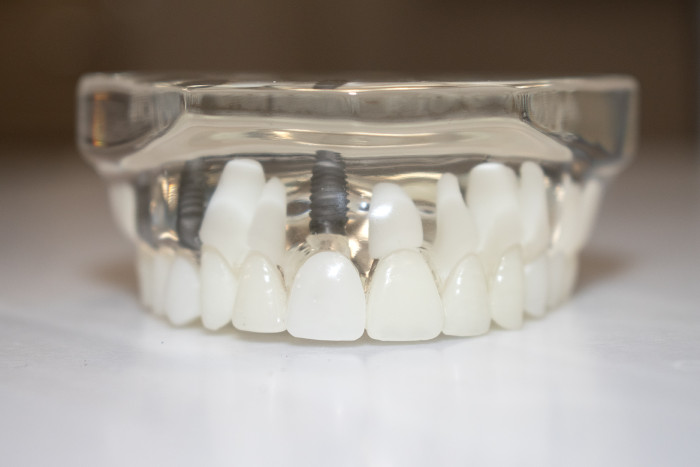
Missing teeth can affect more than your smile and confidence; they can make eating or even speaking uncomfortable. If you are missing teeth and want to restore your smile, common treatments include dental implants, bridges and dentures. Each option has pros and cons, and the right choice for you will depend on your oral health, cost and your long-term goals.
Below are some considerations to help you determine the best option for your situation.
What Are Dental Implants?
A dental implant is an artificial tooth with a custom crown and a root that gets anchored in the jawbone. Implants are durable and feel more like natural teeth. They can also be used to support bridges or dentures.
Pros
- Look and feel natural
- Do not rely on neighboring teeth for support
- Can help preserve jawbone
- Cannot get decay
- Are durable with proper care
Cons
- Require a surgical procedure
- Typically have a longer treatment timeline
- Can have a higher upfront cost
- Can have periodontal issues
- Need regular cleaning like natural teeth
- Require healthy bone for placement
What Is a Dental Bridge?
A dental bridge is a fixed, non-removable span of one or more artificial teeth that fills a gap. Instead of affixing the teeth to the jawbone, they are attached to the natural teeth on either side of the space. These neighboring teeth are typically prepared for crowns, which hold the bridge in place.
Pros
- Fixed in place
- Usually faster than implants
- No oral surgery required
- Work well if nearby teeth need crowns
Cons
- Require altering neighboring teeth
- Do not replace the tooth root
- Can be harder to clean
- Can get decay
- Typically don’t last as long as implants
What Are Dentures?
Dentures are removable teeth that replace several missing teeth or a full arch of teeth. Partial dentures replace some teeth, while full dentures replace all the teeth in the upper or lower arch. For some patients, dentures can be combined with implant treatment for greater stability.
Pros
- Can replace many teeth at once
- Usually the most cost-effective option, especially for extensive tooth loss
- No additional surgery required for traditional dentures
Cons
- May feel less secure than fixed options
- Can take time to get used to
- Will need periodic adjustments or replacement
Compare Your Options
This chart offers a simple side-by-side look at common benefits.
| Benefit | Dental Implants | Bridges | Dentures |
|---|---|---|---|
| Looks natural | ✓ | ✓ | ✓ |
| Fixed in place and feels secure in the mouth | ✓ | ✓ |
|
| Removable |
|
| ✓ |
| Replaces a single missing tooth well | ✓ | ✓ |
|
| Can replace several missing teeth | ✓ | ✓ | ✓ |
| Can replace a full arch of teeth | ✓ |
| ✓ |
| Helps support jawbone health | ✓ |
|
|
| Does not rely on neighboring teeth for support | ✓ |
| ✓ |
| No oral surgery required |
| ✓ | |
| More cost effective |
|
| ✓ |
Which Option Is Best for You?
There is no one-size-fits-all answer when it comes to replacing missing teeth. The best choice depends on several factors, including how many teeth are missing, the health of your gums and jawbone, cost and personal preferences. Consult with your dentist to determine the best option for your needs.
- Dental implants are often a strong fit for patients who want the most natural-feeling, long-term solution and are comfortable with a longer treatment process.
- Bridges can be a great choice when one or a few teeth are missing and you want a fixed option without surgery.
- Dentures are often the most practical solution when many or all teeth need to be replaced, especially when affordability is a major factor.
As you explore your options, we’re here to answer any questions and help you make an informed decision. Call us at 785-539-5949 to schedule an appointment.